+33 (0)4 72 14 17 99 Quote (0) Quote
Quote 0 Quote
Contact us

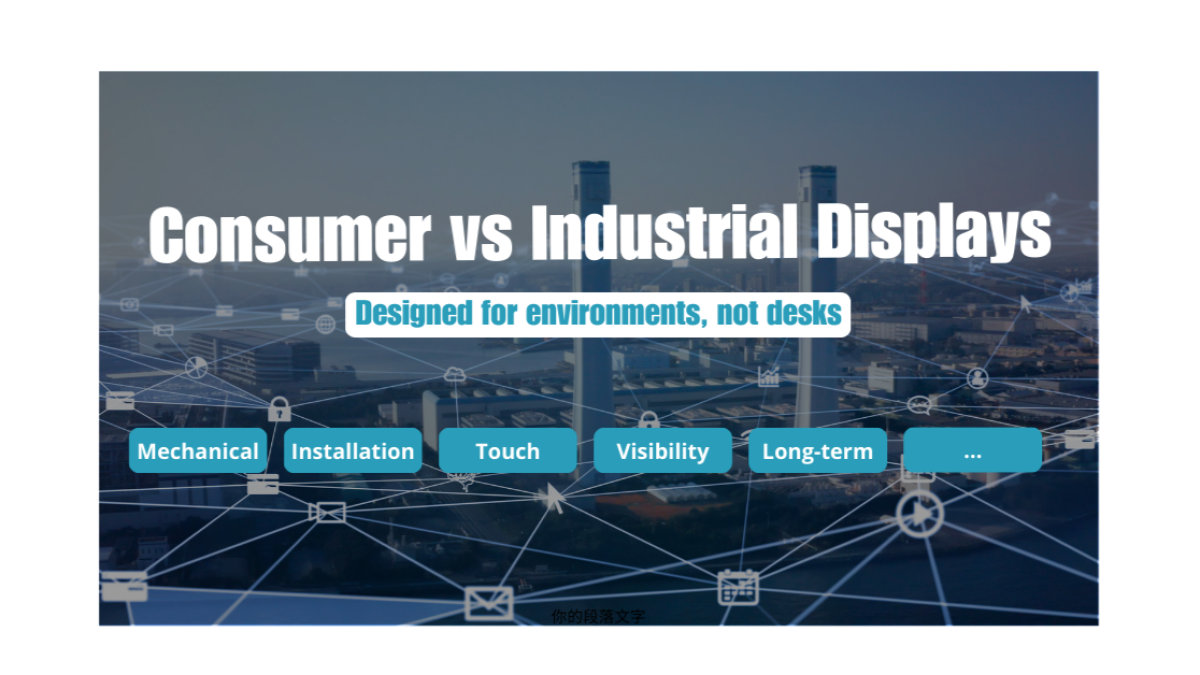
When selecting a display, many projects start with a simple question: “Isn’t a display just a display?”

In office or home environments, consumer displays work perfectly well. However, once a display is deployed in industrial, outdoor, medical, or transportation environments, it often becomes one of the first components to fail.

The difference lies not in resolution alone, but in how and where the display is used.
Displays Are Defined by Their Environment

Consumer displays are designed for controlled environments:

  • Stable temperature
  • Clean air
  • Limited operating hours

Industrial displays, by contrast, are built for real-world conditions:

  • Dust, vibration, moisture
  • Continuous 24/7 operation
  • Integration into machines and systems

Understanding this distinction is critical for system designers and integrators.

Mechanical Robustness and Enclosure Design

Consumer displays prioritize slim profiles and aesthetics, typically using plastic housings.

Industrial displays are engineered for durability:

  • Aluminum or stainless-steel enclosures
  • Resistance to vibration and mechanical shock
  • Designs suitable for washdown or harsh production areas

In applications such as factory automation, food processing, or equipment integration, mechanical strength directly impacts system reliability.

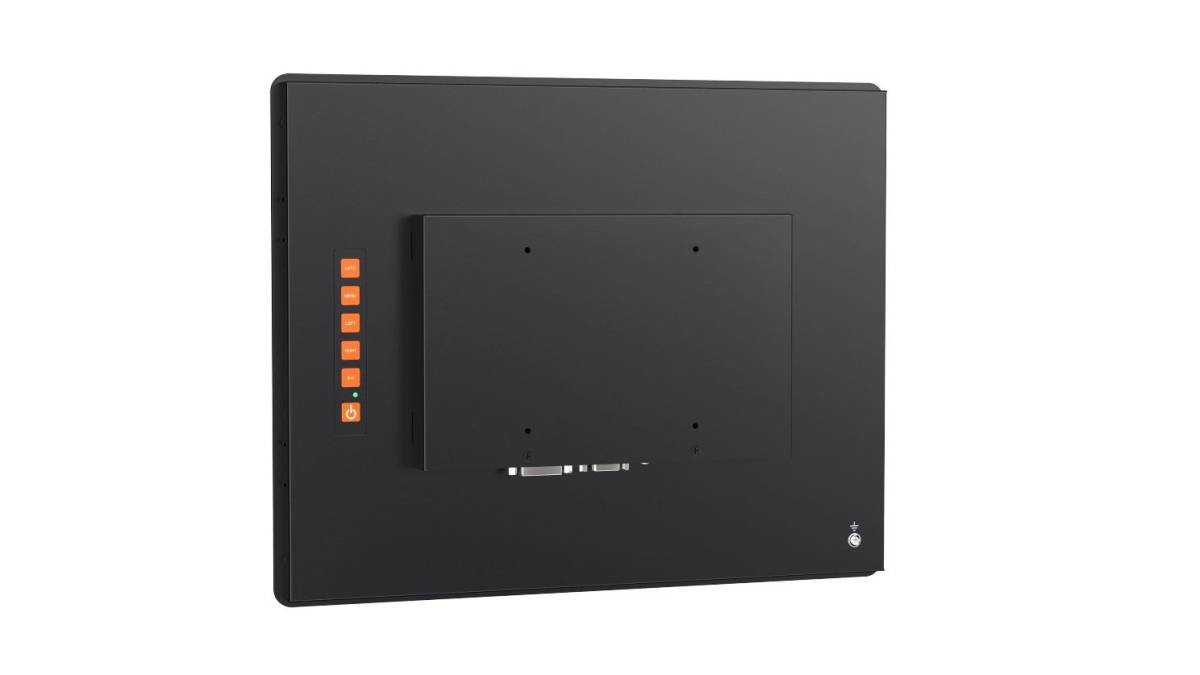
Example of industrial monitor rear panel - Intronix Systems

Installation Flexibility and System Integration

Consumer displays are generally limited to:

  • Desktop use
  • Standard VESA wall mounting

Industrial displays are designed as system components, supporting:

  • Panel mounting into machines or control cabinets
  • VESA, wall, arm, and suspended mounting
  • Easy integration into OEM and HMI systems

This flexibility allows industrial displays to adapt to the machine — not the other way around.

Example of an industrial monitor for the food industry - Intronix Systems

Touch Technology for Different Operating Conditions

Consumer displays typically rely on projected capacitive touch, optimized for bare-finger use.

Industrial displays offer multiple options:

  • Resistive touch for gloves, moisture, or harsh conditions
  • Capacitive touch for modern multi-touch interfaces
  • Non-touch versions for safety-critical or remote operation

The correct touch technology depends on how operators interact with the system, not on trends.

Capacitive or resistive touch technology for industrial monitors - Intronix Systems

Visibility, Brightness, and Optical Treatments

Consumer displays focus on image quality under indoor lighting.

Industrial displays prioritize readability in challenging environments, offering:

  • High-brightness panels for outdoor or semi-outdoor use
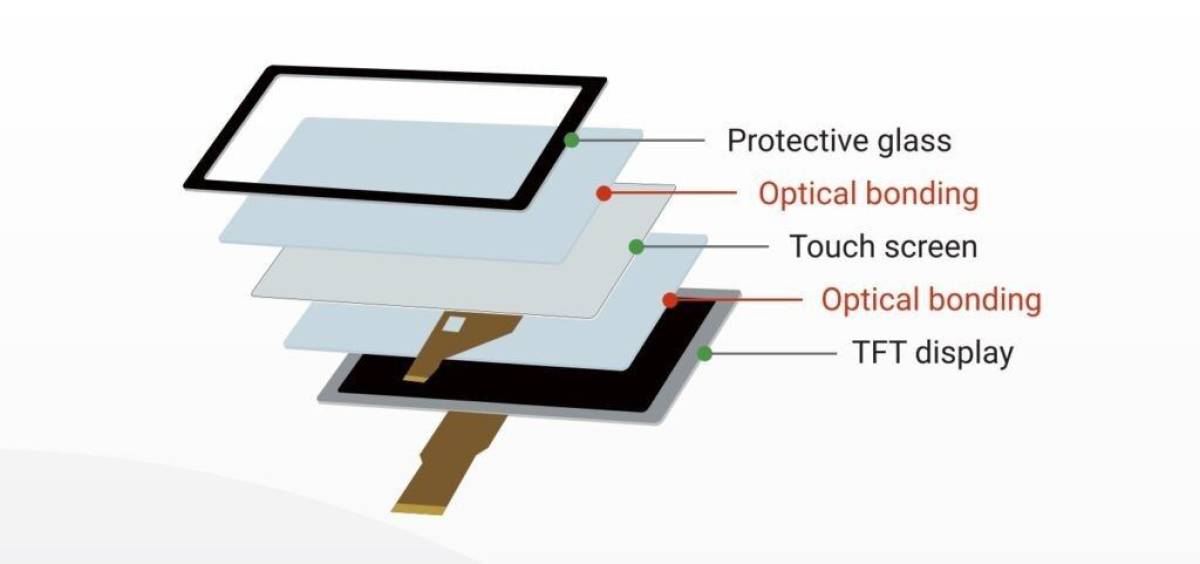
  • Optical bonding to reduce internal reflections
  • Surface treatments such as AR (anti-reflection), AG (anti-glare), and AF (anti-fingerprint)

In control rooms, outdoor kiosks, or mobile installations, visibility is not a luxury — it is a requirement.

composition of an industrial screen - intronix systems

Environmental Tolerance: Temperature, Power, and Protection

Industrial environments demand resilience:

  • Wide operating temperature ranges
  • Wide voltage input for unstable power sources
  • IP-rated protection against dust and water
  • IK-rated resistance to mechanical impact

Consumer displays are not designed for these conditions, making industrial-grade protection essential in sectors such as transportation, outdoor infrastructure, and food & beverage.

thermal constraints industrial screen - intronix systems

Reliability, Thermal Design, and Continuous Operation

Consumer displays are typically designed for intermittent use.

Industrial displays are engineered for:

  • 24/7 continuous operation
  • Optimized thermal design (often fanless)
  • EMC and EMI compliance for industrial environments

Reliability over time matters more than peak performance.

ultra-robust full stainless steel industrial monitor - intronix systems

Product Lifecycle and Long-Term Availability

One of the most overlooked differences is product lifecycle.

Consumer displays:

  • Short life cycles
  • Frequent model changes

Industrial displays:

  • Long-term availability
  • Stable configurations for multi-year projects
  • Support for customization and controlled design changes

For OEMs and system integrators, long-term supply is as important as technical performance.

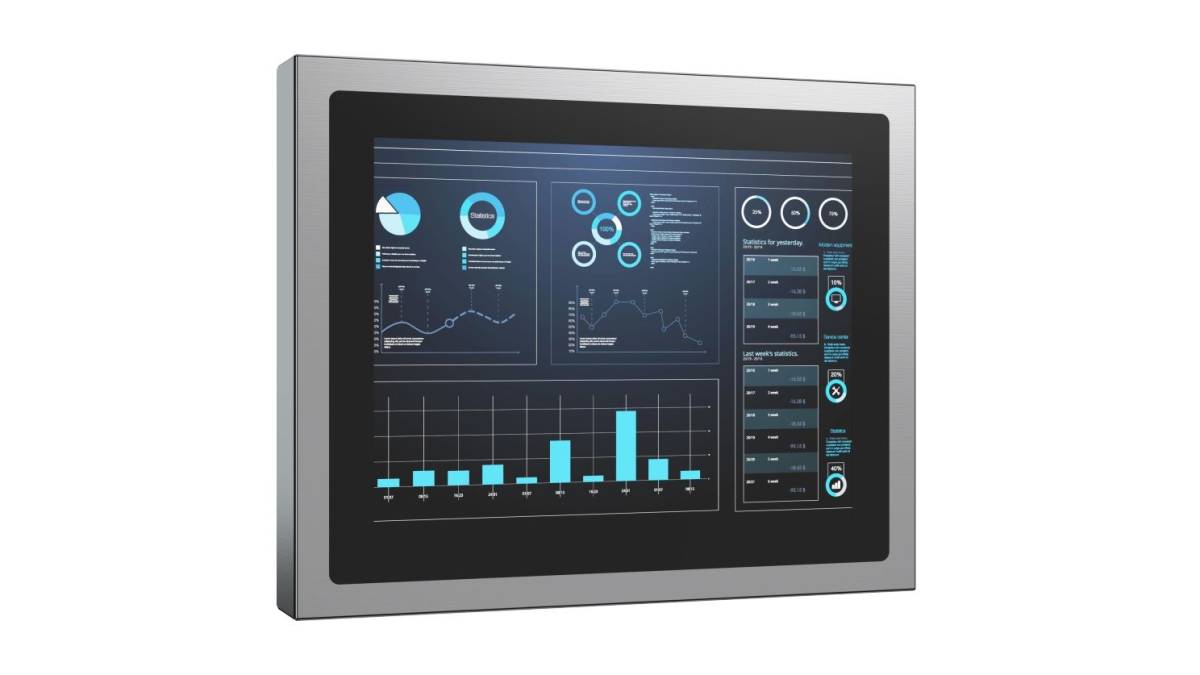
Example monitor for industry - Intronix Systems

Choosing the Right Display for the Application

From factory floors and hygienic environments to outdoor systems and control rooms, the right display depends on usage conditions, installation requirements, and operational expectations.

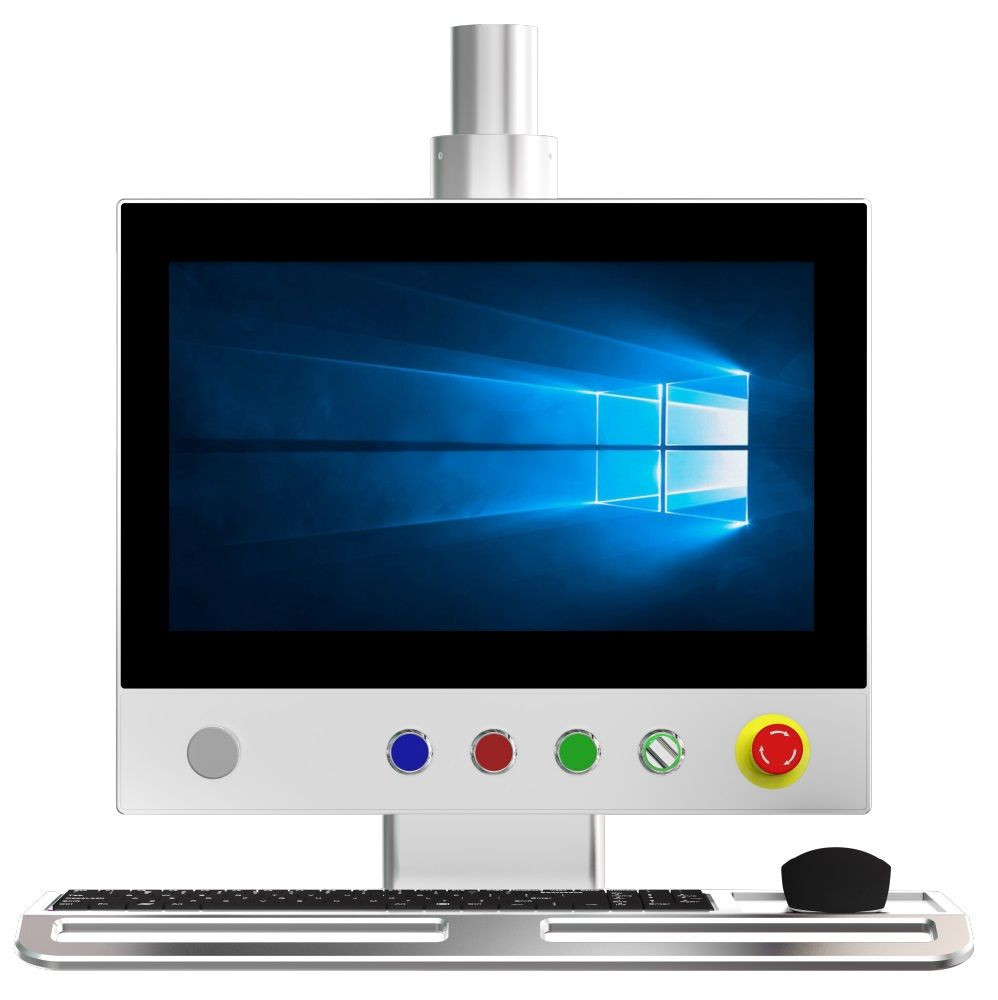
At Intronix, we provide a comprehensive range of industrial monitors — including panel-mount displays, stainless steel monitors, outdoor high-brightness solutions, and arm-mounted HMIs — designed to meet the demands of diverse industrial applications.

Choosing the right display is not about specifications alone, but about ensuring long-term system reliability.

Do you have any questions or need a quote? Please do not hesitate to contact us.