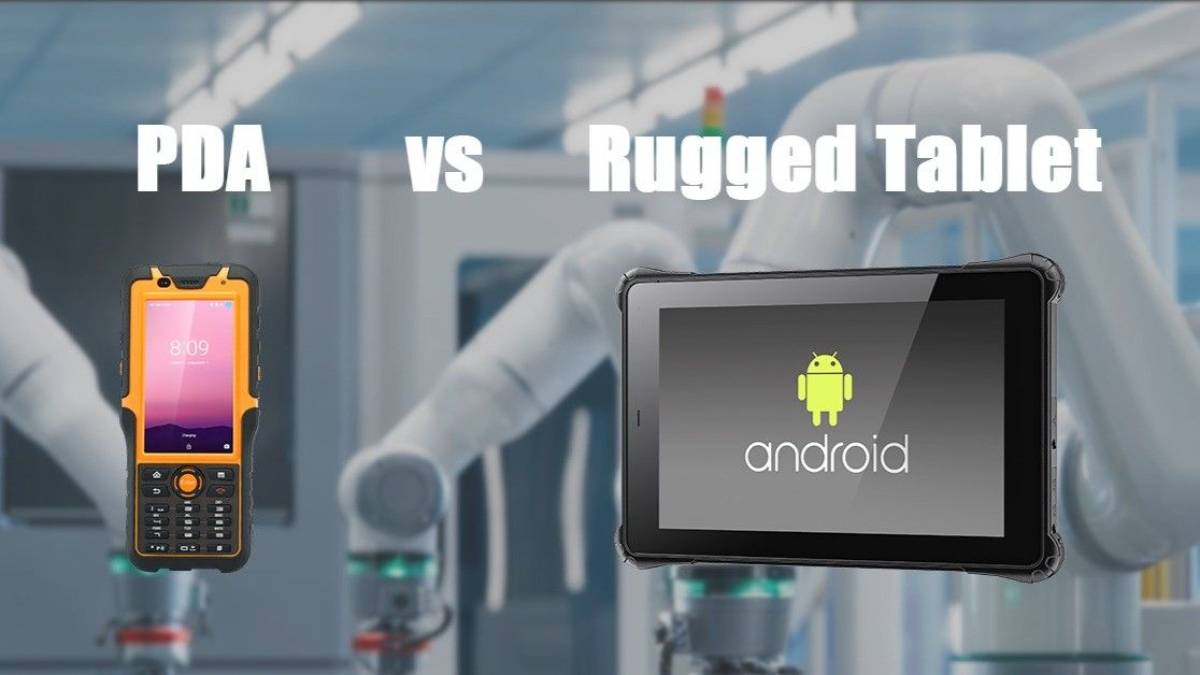
Form factor should never be the only selection criterion.
Screen size and brightness
A compact screen improves mobility, while a larger display provides more space for information.
For outdoor environments or brightly lit areas, screen brightness should also be considered.
Android or Windows
Android is suitable for many mobile data collection, logistics, traceability and field service applications.
Windows may be required when the terminal must run business software specifically developed for that environment.
Barcode scanning, NFC and RFID
The type of data that needs to be captured should be defined before selecting a device.
Depending on the model, INTRONIX rugged PDAs and tablets can provide:
-
1D/2D barcode scanning;
-
NFC;
-
RFID;
-
cameras;
-
fingerprint readers.
These functions are not available on every model, so the configuration should be selected according to the application.
Connectivity
Wi-Fi, Bluetooth, 4G LTE, 5G or GNSS may be required depending on whether the terminal is used in a warehouse, factory, vehicle or directly in the field.
Ruggedness and operating environment
The required level of protection depends on the actual operating environment.
IP ratings are used to characterize the protection provided by an enclosure against the ingress of solid objects and water. Depending on the reference, the INTRONIX range includes different IP protection levels and models tested to MIL-STD-810G or MIL-STD-810H requirements.
The required level should therefore be determined from actual exposure to dust, water, drops, vibration and operating conditions.
Battery and shift organization
Battery autonomy should not be evaluated solely from its stated capacity.
Shift duration, access to charging points and, depending on the model, removable batteries, dual-battery designs or hot-swappable solutions should also be considered.